
- All
- Product Name
- Product Keyword
- Product Model
- Product Summary
- Product Description
- Multi Field Search
Please Choose Your Language
Views: 0 Author: Site Editor Publish Time: 2026-10-20 Origin: Site


In high-volume printed circuit board (PCB) manufacturing, the cleaning and drying stages dictate final product reliability. Residual moisture or ionic contamination quickly leads to oxidation, electrochemical migration, and costly field failures. You simply cannot afford to leave these critical final steps to chance. Relying on standard plant compressed air is highly inefficient and constantly risks oil contamination on your bare boards. Transitioning to a dedicated Centrifugal Blower for PCB Cleaning ensures continuous, high-velocity, oil-free air while drastically reducing your energy costs.
Selecting the correct blower requires matching aerodynamic performance to specific line speeds, conveyor widths, and air knife configurations. In this guide, you will learn how to evaluate system specifications, prevent common implementation failures, and choose the optimal blower size for your surface-mount technology lines. You will discover exactly what drives reliable performance in modern electronics washing and drying modules.
Purpose-Built Sizing: Proper blower sizing prevents moisture masking under low-standoff components (like BGAs) and dictates line throughput.
The 2.2kW Benchmark: A 2.2kW centrifugal blower is often the optimal baseline for standard single or dual air-knife setups on typical PCB conveyors, balancing power consumption with space constraints.
System Synergy: An air knife blower is only as effective as its integration; piping design and filter maintenance directly impact pressure delivery to the board surface.
Mandatory Requirements: 100% oil-free operation and high-efficiency filtration are non-negotiable to prevent re-contaminating washed boards.
Unoptimized drying systems cause major production bottlenecks on the factory floor. Operators often slow down conveyor speeds to compensate for weak airflow. This directly hurts your daily output and reduces overall facility efficiency. Alternatively, weak systems leave trapped water under dense surface-mount components. Ball grid arrays (BGAs) and quad flat packages (QFPs) are especially vulnerable to this issue. This masked moisture causes defective batches. It promotes dendrite growth and subsequent short circuits once the boards deploy in the field. You need a highly reliable drying mechanism to prevent these costly failures.
You must also consider the severe energy inefficiency of alternative methods. Many legacy facilities rely on plant compressed air to blow off water. This approach consumes massive amounts of electricity. Compressed air systems require heavy infrastructure. They use large compressors, dedicated dryers, and extensive piping networks. Plant air acts as a massive drain on your facility's power resources. You spend exponentially more on operational expenses. Conversely, a dedicated PCB drying blower delivers high-volume, energy-efficient performance. It generates the required shear force locally. It significantly cuts utility bills and frees up your main compressors for other essential factory tasks.
An optimal drying system meets three strict success criteria. First, it achieves 100% moisture removal at maximum line speed. Boards must emerge completely dry and ready for immediate downstream processing or conformal coating. Second, the system must maintain a low acoustic profile. High noise levels disrupt the factory floor and violate occupational safety limits. Third, the blower must operate with minimal thermal output. You want to protect sensitive substrates from thermal shock. Excessive heat causes warping or delamination in thin boards. Balancing these three criteria ensures long-term operational success.
You must carefully balance airflow volume (CFM) against air pressure (mbar). This relationship defines the aerodynamic performance of your system. High velocity is essential to physically shear water droplets off the board surface. You need enough force to break the surface tension holding the water in place. Sufficient volume is equally necessary. Volume maintains that critical velocity across the entire length of the air knife. If you lack adequate volume, the edges of the knife lose pressure. This creates dead zones where boards remain wet. Always map your CFM requirements directly to the total slotted area of your air knives.
Evaluate the physical space constraints of your specific wash and dry module. Factory floor space is expensive and often highly restricted. A compact 2.2kW centrifugal blower frequently hits the optimal "sweet spot" here. It fits perfectly into standard 18-inch to 24-inch conveyor lines. You avoid heavy structural modifications or expanding the footprint of your washing machine. This specific power rating delivers enough thrust for standard dual-knife configurations. It balances robust performance against tight spatial limitations effectively.
Hydrocarbon contamination ruins bare boards. You must demand a 100% oil-free design. Standard air compressors often leak microscopic oil droplets into the airstream. This oil deposits onto the PCB, ruining solderability and coating adhesion. Select blowers featuring direct-drive motors. Look for specialized ceramic or magnetic bearing designs. These advanced bearings eliminate oil presence entirely. They keep the airstream pristine and safeguard your product quality.
Centrifugal compression naturally heats the air through friction and pressure. Frame this adiabatic heating as a double-edged sword. Mild heat actively aids rapid evaporation. It accelerates the final drying phase beautifully. However, excessive heat creates major problems. Temperatures exceeding safe limits can warp thin substrates permanently. High heat also prematurely degrades delicate components on the board. You must manage this thermal output carefully. Choose a blower size perfectly matched to your needs. Oversized blowers generate unnecessary heat and risk damaging your inventory.
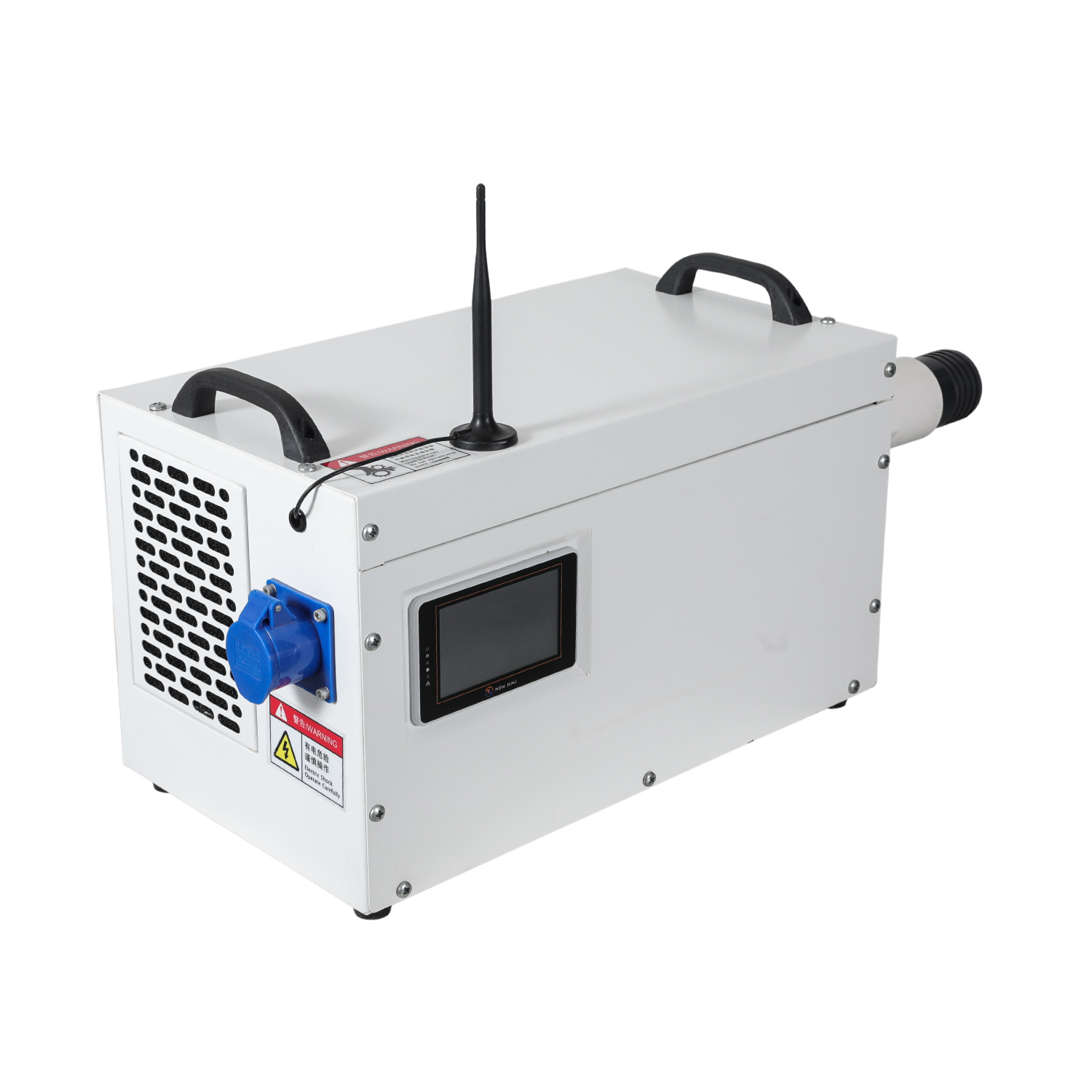
Your blower must perfectly match the gap width and length of your air knives. The physical distance from the knife to the PCB surface drastically impacts drying performance. Impact velocity drops exponentially as you move the knife further away from the board. You lose crucial shearing power with every millimeter of distance. Keep the standoff distance as tight as safely possible. Avoid component collisions, but position the knife aggressively close. An air knife blower relies entirely on this optimal physical integration. Poor knife placement negates the power of an excellent motor.
Piping and manifold losses represent a major implementation risk for integrators. Sharp elbows, corrugated hoses, and excessively long pipe runs create heavy pressure drops. Airflow faces friction at every turn. Poorly designed piping forces you to over-spec the motor just to compensate for the lost pressure. You waste money and energy. Use smooth-bore rigid pipes wherever possible. Keep your runs short and perfectly straight. Utilize sweeping elbows instead of sharp 90-degree turns. Efficient plumbing maximizes the energy delivered to the board.
Consider aerodynamic best practices when positioning the knives. Angle your knives at 10 to 15 degrees against the direction of conveyor travel. This specific angle maximizes the physical sweeping action. A well-angled PCB cleaning blower pushes water backward and off the trailing edge of the board. It prevents moisture from traveling forward into the dry zones of the machine. Proper angling ensures water falls cleanly into the collection pan.
System Configuration Best Practices
| Configuration Parameter | Recommended Target | Impact on System Performance |
|---|---|---|
| Standoff Distance | 0.5 to 1.5 inches from highest component | Maximizes impact velocity; prevents edge-wetting. |
| Angle of Attack | 10 to 15 degrees opposing travel | Shears water backward; prevents forward contamination. |
| Piping Geometry | Smooth bore, minimum sweeping elbows | Reduces friction losses; lowers required motor horsepower. |
| Air Knife Gap | 0.04 to 0.08 inches | Maintains high velocity while controlling total CFM demand. |
Look carefully beyond the initial purchase price of the hardware. Evaluate the long-term maintenance realities first. Bearings are often the primary failure point in high-speed applications. Continuous 24/7 operation stresses these components heavily. Understand the rated lifespan of the bearings before purchasing. You also need incredibly easy access to the inlet filters. Complicated filter swaps lead directly to neglected maintenance. If operators need special tools to change a filter, they will skip the task.
Factory dust and airborne flux residue quickly clog inlet filters. A clogged filter chokes the entire system. It reduces the available CFM drastically. It starves the manifold and leaves your boards soaking wet. Furthermore, a starved motor runs hotter, risking premature failure. You must highlight the need for active monitoring.
Install pressure differential gauges across all filter housings.
Establish a strict calendar schedule for filter inspections.
Keep spare filters stocked near the washing module.
Train operators to recognize the sound of a starving blower.
High-speed air shears create significant aerodynamic noise. You must evaluate acoustic compliance during your selection process. Workplace safety is paramount. Select blowers featuring factory-included sound enclosures. Look for specialized inlet and outlet silencers. These additions help you comfortably meet OSHA or local workplace noise regulations. You protect your operators' hearing while maintaining high line speeds. Do not compromise on acoustic dampening.
Vendor selection goes far beyond just buying raw hardware. Does your prospective vendor offer dedicated application engineering? Prioritize partners who actively calculate exact pressure drops for your layout. They should recommend specific air knife pairings based on your line speed. Avoid vendors who merely sell a standalone motor without asking about your application. You need an integration partner, not just a parts catalog.
Look for vendors willing to provide trial units. Testing a unit on your actual factory floor removes all guesswork. Additionally, computational fluid dynamics (CFD) modeling is a major advantage. Advanced vendors use CFD to validate custom wash-line integrations digitally. They map the airflow patterns before you cut a single piece of pipe. This ensures even pressure distribution across the entire board surface. It guarantees performance.
Assess the vendor's warranty carefully. Electronics manufacturing requires continuous, unforgiving operation. Tier-1 environments subject equipment to high-cycle stress and harsh ambient conditions. Ensure your warranty explicitly covers these grueling industrial realities. Look for guarantees on bearing life and motor efficiency under continuous load.
Transitioning to a modernized centrifugal drying system secures your production reliability. It serves as a direct, measurable investment in board quality and overall line throughput. You eliminate the risk of electrochemical migration caused by hidden moisture.
Avoid over-specifying your motor horsepower during the design phase. This common mistake wastes expensive energy and generates excess heat. Conversely, do not under-specify your required pressure. Weak pressure leaves hidden moisture trapped under your dense components.
Audit your current line speed today. Measure your conveyor width accurately and track your current moisture defect rates. Use this baseline data to contact an integration specialist. Request a customized sizing calculation to optimize your washing module completely.
A: Compressed air is highly expensive to generate. It often costs up to 10 times the energy price of a centrifugal system. Furthermore, plant air frequently carries trace oils and moisture from the central compressor. This contamination ruins bare boards and compromises conformal coating adhesion. A dedicated system provides clean, efficient air.
A: Typically, a 2.2kW unit comfortably supports one to two standard air knives. These knives usually range from 12 to 24 inches each. Support depends entirely on the knife gap size and your required impact velocity. This capacity makes the 2.2kW size ideal for standard SMT line widths.
A: While warm air actively assists the drying process, excessive heat causes damage. Temperatures exceeding manufacturer substrate limits—usually above 85°C for extended exposure—can warp the PCB permanently. It can also damage heat-sensitive components. Proper blower sizing prevents this excessive thermal buildup.
A: It depends heavily on your factory air quality. Typically, you should change them every 3 to 6 months. Operating with a clogged filter starves the blower entirely. It increases motor heat and drastically reduces the air velocity at the knife, leading directly to wet boards.


