
- All
- Product Name
- Product Keyword
- Product Model
- Product Summary
- Product Description
- Multi Field Search
Please Choose Your Language
Views: 0 Author: Site Editor Publish Time: 2026-09-22 Origin: Site


Selecting industrial air-moving equipment requires deep technical alignment. You must move beyond basic nameplate ratings to find success. Matching aerodynamic performance to actual system resistance is absolutely crucial. At this specific power tier, your margin for error is incredibly narrow. Underperforming equipment quickly disrupts critical production lines. Conversely, poorly sized units generate massive energy waste. The balance between adequate pressure and sustainable operation demands strict attention. This guide provides a comprehensive technical evaluation framework. We will help engineers and procurement teams align blower specifications with rigorous high-pressure demands. You will learn how to evaluate system criteria and mitigate operational risks. Ultimately, we ensure you achieve reliable operation and strict regulatory compliance. You will discover methods to optimize energy usage seamlessly. Proper selection prevents costly unplanned downtime. Let us explore the engineering fundamentals guiding successful industrial implementations today. These insights empower you to make highly confident purchasing decisions.
Match Impeller Design to Application: Radial and backward-inclined impellers dictate the efficiency and stability of high-pressure outputs.
Verify Performance Curves, Not Just Peaks: A rated 7.5kW motor must sustainably cross your required operating point (e.g., 50kPa) without crossing the surge line.
Prioritize System Integration: High-speed, direct-drive units offer better efficiency but require strict adherence to filtration, VFD compatibility, and thermal management standards.
Evaluate TCO over CapEx: Energy consumption accounts for the majority of a blower’s lifecycle cost; IE3/IE4 motors and precise sizing are critical.
Establishing the exact operating point is your first technical hurdle. You must calculate precise requirements for volumetric flow rate against system static pressure. Many facilities fail because they guess these critical parameters. Accurate mapping ensures your 7.5kW Centrifugal Blower operates efficiently. We strongly advise plotting a comprehensive system resistance curve. This curve visualizes how pressure changes as flow increases. You can use data from mass flow meters to build this profile accurately.
Identify your actual application constraints clearly. High air volume solves entirely different problems than high pressure. Overcoming deep fluid heads in wastewater aeration requires sustained pressure pushing through heavy liquid. You must calculate the static head based on tank depth. Conversely, pneumatic conveying of dense materials demands high pressure to prevent pipe blockages. Identify which metric truly limits your process. Do you need velocity to move light dust, or force to move heavy sludge?
Define acceptable power consumption tolerances at your exact duty point. You want the motor fully utilized but never pushed into overload conditions. Establish baseline efficiency metrics early in the design phase. They prevent engineers from specifying grossly oversized motors. Oversized motors run poorly at partial loads. They ruin your facility's power factor. Establishing firm criteria ensures your equipment rating perfectly matches the industrial task.
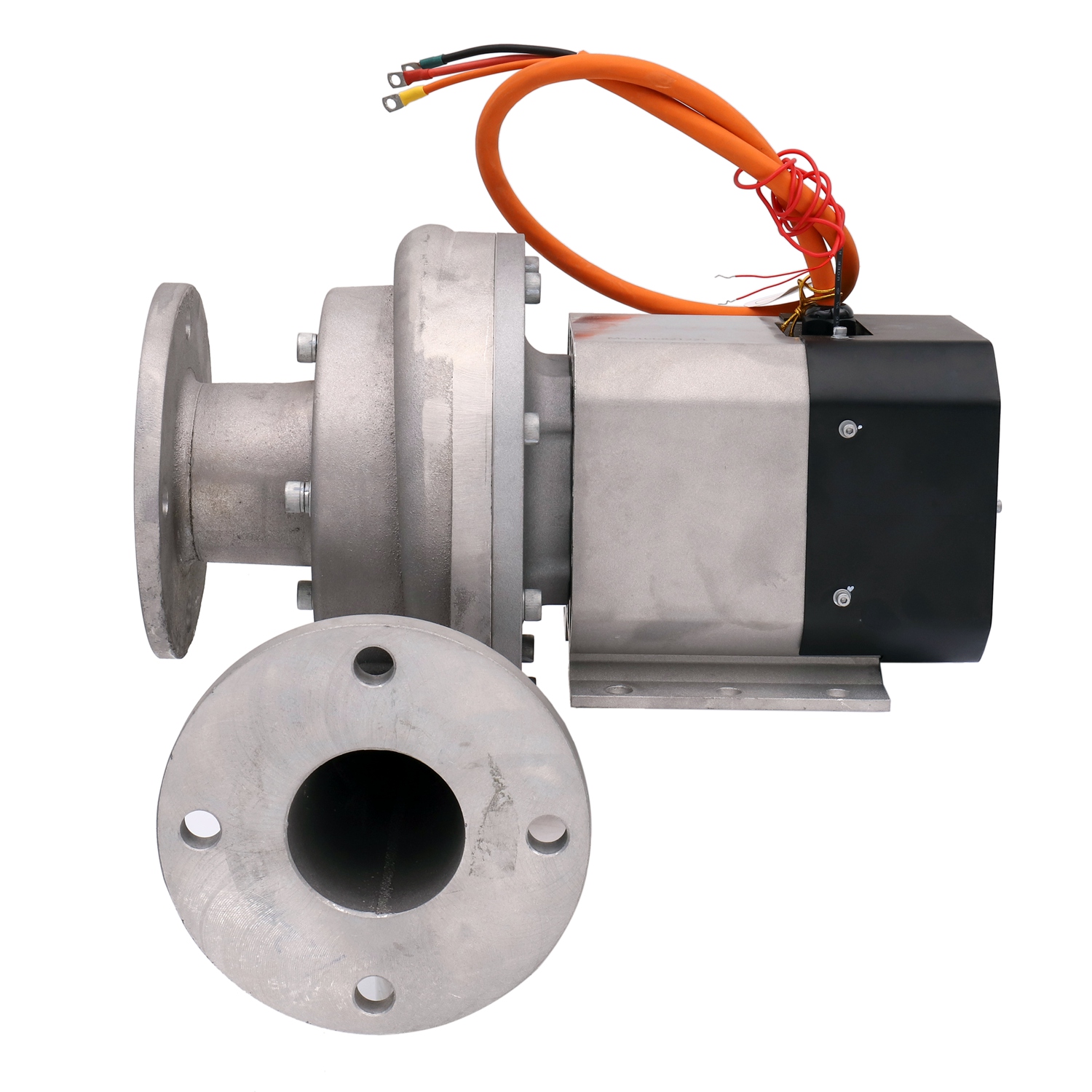
Evaluating equipment types directly impacts your facility's operational stability. Engineers often choose between high-speed and standard direct-drive units. A high speed centrifugal blower provides exceptional aerodynamic efficiency. They usually feature compact footprints and advanced direct-coupled designs. Traditional belt-driven models require more frequent, intensive maintenance intervals. Belts stretch under heavy torque. They slip during startup. They degrade rapidly over time. Direct-drive high-speed units eliminate these frustrating mechanical losses entirely. They transfer power instantly from motor to impeller.
Impeller geometry profoundly influences overall machine performance. Clean air applications thrive on different designs than dirty airstreams. We see two primary geometries dominate this specific power tier. Backward-inclined blades offer the highest efficiency limits. They feature excellent non-overloading power characteristics. The motor remains safe even if system resistance drops unexpectedly. Radial blades provide rugged, uncompromising durability. They handle particle-laden air exceptionally well. Dust and debris slide off radial blades easily.
| Feature | Backward-Inclined | Radial |
|---|---|---|
| Efficiency Level | High (70-85%) | Moderate (50-60%) |
| Power Characteristic | Non-overloading | Overloading potential |
| Ideal Environment | Clean air, filtered gases | Dust, abrasive particulates |
| Manufacturing Cost | Higher complexity | Lower complexity |
Determine if you need single-stage or multi-stage configurations. Extreme pressure constraints sometimes necessitate complex multi-stage builds. They prevent excessive impeller speeds. They also reduce material stress on the external casing. Single-stage units work perfectly for moderate-to-high pressure targets if rotational speeds remain manageable. Multi-stage designs distribute the compression work across several impellers. This approach keeps temperatures lower. It extends the mechanical life of the equipment considerably.
You must validate pressure sustainability under continuous, grueling loads. Thermal degradation becomes a severe risk during 24/7 operation. A reliable 50kPa centrifugal blower must maintain its output without overheating. Look for robust bearing designs capable of handling continuous thrust loads. Standard bearings fail quickly under high-pressure aerodynamic forces. Upgraded angular contact bearings are practically mandatory here.
Assess motor efficiency standards closely during procurement. We recommend specifying IE3 or IE4 premium efficiency motors exclusively. Pair them with modern Variable Frequency Drive (VFD) controls. VFDs scale power draw dynamically during partial-load operations. They prevent wasted energy when facility demand drops. They also provide soft-start capabilities. Soft starts reduce mechanical shock to the impeller. They lower inrush electrical currents significantly.
Acoustic and structural compliance is critical for workplace safety. Review the dB(A) ratings at 1-meter distances carefully. You must meet strict OSHA and local noise regulations. Prolonged exposure above 85 dB(A) mandates hearing protection programs. Assess the casing thickness for inherent vibration dampening. Thicker cast metal casings isolate high-frequency mechanical noise better. Flimsy sheet metal housings rattle and amplify sound waves.
Material suitability prevents premature mechanical failure. Choose your construction materials based on the airstream composition. Cast aluminum works flawlessly for lightweight, clean applications. Carbon steel handles standard industrial environments quite well. Coated stainless steel is absolutely mandatory for corrosive gases. Hydrogen sulfide in wastewater destroys carbon steel rapidly. Selecting the correct alloy saves you from catastrophic housing leaks.
Field implementation introduces distinct, unavoidable operational hazards. The "surge" risk is particularly dangerous for all centrifugal designs. You must know how to read the manufacturer's performance curve accurately. Identify the exact surge limit clearly on the chart. Operating below minimum flow volumes causes sudden flow reversal. The air forcefully pushes back against the spinning impeller. This creates catastrophic vibration. It destroys precision bearings in minutes. Engineers often install automated blow-off valves to prevent this. These valves open instantly when flow drops dangerously low.
Thermal management requires proactive, careful planning. High-pressure continuous operation generates substantial heat of compression. Compressing air to 50kPa inherently raises its temperature. Evaluate your need for external cooling mechanisms. Sometimes, ambient air cooling falls drastically short. You might need specialized liquid-cooled bearing housings. High-temperature environments bake grease and ruin seals.
Installation prerequisites dictate long-term machine reliability. We strictly enforce several foundational rules for our industrial projects:
Ensure massive foundation rigidity. Mass and stiffness prevent resonant frequencies from amplifying and destroying equipment.
Enforce inlet filtration strictness. High-speed units cannot tolerate solid debris impacting the fast-moving impeller.
Execute precise piping alignment. Misaligned pipes induce severe, twisting mechanical stress on the blower casing.
Implement flexible expansion joints. They isolate machinery vibrations from rigid facility ductwork.
Addressing these harsh realities upfront prevents catastrophic failures later. Proper installation equals decades of reliable service.
Selecting the right vendor requires strict, unforgiving evaluation protocols. Always demand factory-tested, certified performance curves. Insist they map the data to your specific altitude and ambient temperature. Generalized marketing graphs are practically useless for high-pressure sizing. Air density changes drastically affect final aerodynamic performance. A blower tested at sea level performs poorly in high-altitude mining operations. Make the vendor prove their numbers mathematically.
Evaluate your ongoing operational demands rigorously. Focus on a comprehensive 5-year energy consumption model. Calculate your local electrical costs. Model predictable VFD energy savings accurately. Factor in predicted maintenance downtime and labor costs. This operational review is vital for industrial budgeting. You must look far beyond the initial capital expenditure. Cheap equipment often consumes massive amounts of electricity. Premium equipment pays for itself through daily energy efficiency.
Assess the vendor Service Level Agreement carefully. Create a checklist for ongoing engineering support. Verify warranty limits regarding continuous, non-stop operation. Some warranties void if equipment runs 24/7. Confirm the local availability of critical wear parts. Bearings, belts, and mechanical seals must be readily accessible. Waiting weeks for overseas parts destroys production schedules. Strong Original Equipment Manufacturer support during commissioning ensures a smooth startup. Every industrial centrifugal blower installation benefits from expert oversight. Engineers catch minor alignment issues before they become major failures.
Procuring high-pressure air-moving equipment is fundamentally an exercise in exact capacity matching. Mitigating operational risk requires rigorous attention to engineering details. Always mandate certified, altitude-adjusted performance curves before finalizing any purchase order. Prioritize advanced motor controls and premium efficiency ratings to minimize ongoing energy expenditures. Implement stringent installation protocols, focusing heavily on rigid foundations and precise piping alignment. Facilities can secure highly stable, reliable performance by following this analytical approach. Your next step is auditing your actual system resistance data. Gather accurate flow metrics before engaging manufacturers for custom sizing.
A: Yes, provided it is specifically engineered with a high-speed, narrow-profile impeller or a multi-stage configuration. However, airflow volume will be proportionally lower at this pressure compared to low-pressure variants.
A: High-speed centrifugal blowers utilize advanced aerodynamics and faster rotational speeds to achieve high pressure. They deliver significantly higher energy efficiency and lower heat generation than traditional side-channel or regenerative blowers.
A: A VFD allows the blower to adjust its motor speed to match fluctuating system demand. This prevents over-pressurization, reduces the risk of surge, and drastically lowers energy consumption during off-peak operations.
A: Bearing wear from high rotational speeds, impeller imbalance caused by dust accumulation, and filter degradation are the primary concerns. Strict adherence to lubrication schedules and inlet filtration minimizes these operational risks.


