
- All
- Product Name
- Product Keyword
- Product Model
- Product Summary
- Product Description
- Multi Field Search
Please Choose Your Language
Views: 0 Author: Site Editor Publish Time: 2026-10-22 Origin: Site


Aeration processes account for 50% to 70% of a wastewater treatment plant’s energy consumption. Relying on a single, oversized blower to handle fluctuating diurnal loads guarantees wasted energy. It also drives excessive mechanical wear across your entire system. You cannot afford to run large machinery blindly against shifting demand. Transitioning to a multiple-blower setup requires precise control logic. You must prevent erratic start/stop cycles, avoid sudden pressure surges, and maintain stable Dissolved Oxygen (DO) levels continuously. Poor logic leads to immediate equipment failure and biological process instability.
This guide breaks down how to evaluate, structure, and implement a robust sequencing strategy for a multi-blower aeration system. We will explore advanced control logic and equipment selection principles. Following these steps ensures equipment longevity and predictable operational expenditure. You will learn actionable strategies to align blower output strictly to biological oxygen demand.
Effective sequencing relies on pairing a base-load unit with a trimming unit (often a variable-speed industrial blower) to handle peak and trough demand without short-cycling.
Dissolved Oxygen (DO) cascade control combined with Most-Open-Valve (MOV) logic is the industry standard for optimizing airflow and header pressure simultaneously.
Asymmetric blower sizing (e.g., 30%, 30%, 40% capacity splits) provides a wider system turndown range than symmetrically sized units.
System latency and deadband configuration are the most common points of failure in new blower control rollouts.
Plants face increasingly strict effluent compliance limits today. Operators often over-aerate basins to compensate for slow manual adjustments. This defensive strategy easily inflates energy costs by 20% to 30%. They pump excess oxygen into the water just to build a safety buffer. You lose massive amounts of power driving unnecessary airflow.
A successful sequence design eliminates this operational waste. It minimizes blow-off valve usage entirely. It stops blower surging during transitions. The ultimate goal matches the oxygen transfer rate exactly to the biological oxygen demand (BOD). You achieve this precision in real-time.
We must examine energy curve realities carefully. Blower speed, system pressure, and power draw share a highly non-linear relationship. Affinity laws dictate how power requirements scale. Doubling the flow often requires significantly more power exponentially. Sequencing keeps individual machines running within their Best Efficiency Point (BEP). You avoid pushing a single unit into inefficient operating zones. Proper logic ensures machines only run when demand justifies their activation.
Using multiple blowers allows you to match biological loads accurately. Morning peaks demand maximum airflow. Overnight lows require minimal oxygen transfer. Sequencing prevents a massive machine from struggling at the bottom of its performance curve. It protects your motors from overheating during low-flow scenarios.
You have two primary strategies when designing a multi-blower sequence. Each approach serves different operational profiles. You must evaluate your diurnal flow patterns before selecting a method.
Identical blowers alternate roles based on accumulated run-time hours. This setup ensures completely even wear across all machines. A simple timer or PLC tracks running hours constantly. It swaps the lead machine out when it hits a predefined threshold. The standby unit then assumes the primary role.
This symmetric setup works perfectly for smaller facilities. It suits plants experiencing predictable, narrow load shifts. You simply turn on a second identical machine when demand spikes slightly. However, symmetric setups struggle during extreme low-flow periods. Two equally sized machines might both produce too much air individually.
A large, highly efficient fixed-speed blower handles the continuous baseline demand. It runs near 100% capacity continuously. A variable-speed industrial blower serves as the vital "trim" unit. This trim machine ramps up or down to meet fluctuating peaks seamlessly.
This approach delivers the absolute highest energy savings possible. It suits plants experiencing dramatic diurnal flow variations. The base load handles the steady state efficiently. The trim unit smoothly covers the daily peaks and valleys. Asymmetric splits like 30%, 30%, and 40% capacity provide unmatched flexibility. You gain a much wider system turndown range compared to equal sizing.
Analyze your lowest overnight flow rate.
Determine your maximum storm-event peak flow.
Size the trim blower to cover the gap between base blower stages.
Ensure the turndown ranges overlap to prevent sequence hunting.
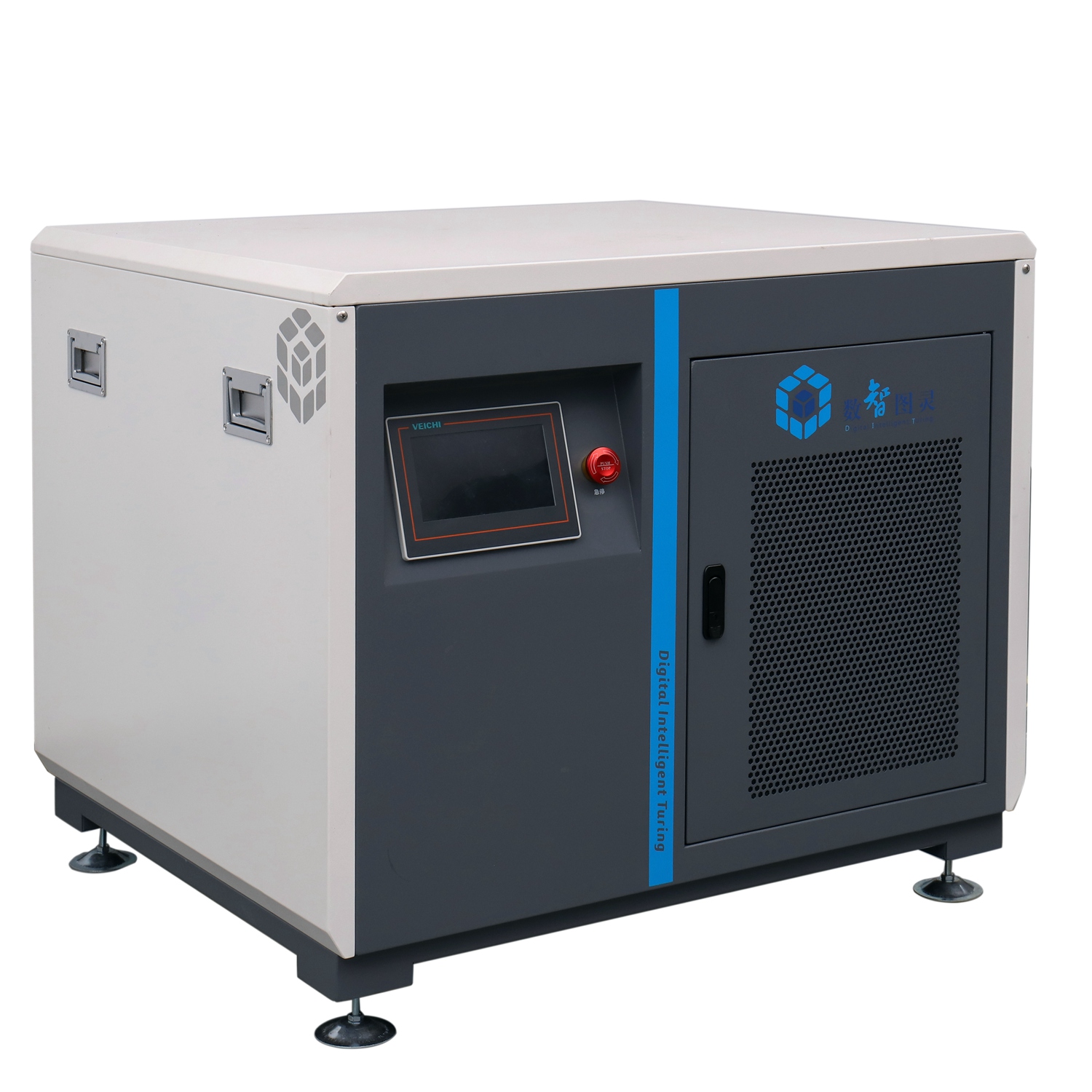
Selecting the ideal wastewater aeration blower mix requires careful planning. No single blower type handles all pressure and flow requirements perfectly. You must blend different technologies to achieve optimal results.
High-speed centrifugal blowers are ideal for base-loading applications. Geared or turbo centrifugal models offer massive efficiency at their specific design points. They move large volumes of air using minimal electrical power. However, they suffer from limited turndown capabilities. You typically only get a 40% to 50% turndown range. If demand drops further, they experience aerodynamic surge. Surge causes violent vibrations and immediate mechanical damage.
Positive Displacement (Rotary Lobe or Screw) units behave entirely differently. They act as highly effective trim blowers. You pair them with Variable Frequency Drives (VFDs) for maximum control. They offer perfectly linear flow control across their operating range. You get wide turndown ratios safely. They do not experience aerodynamic surge under low flows.
When evaluating a system upgrade, scrutinize your vendor's logic capabilities. Prioritize vendors offering a Master Control Panel (MCP). An advanced MCP integrates agnostic hardware easily. It controls mixed technologies seamlessly in one unified sequence. Avoid legacy systems locking you into a single blower type.
Technology Type | Best Application Role | Turndown Capability | Surge Risk | Efficiency at Design Point |
|---|---|---|---|---|
Turbo Centrifugal | Base-Loading | Low (40-50%) | High (Needs protection) | Excellent |
Geared Centrifugal | Base-Loading | Low (45-55%) | High (Needs protection) | Very Good |
Rotary Screw (PD) | Trim / Variable | High (up to 75%) | None | Good |
Rotary Lobe (PD) | Trim / Variable | High (up to 60%) | None | Moderate |
Header Pressure Control represents a thoroughly outdated legacy approach. Many older plants try maintaining a constant pressure in the main air header. They ignore actual basin biological demand entirely. This method feels safe to operators but runs highly inefficiently. Basin control valves often remain pinched closed. Pinched valves cause blowers to work against artificial system resistance. You waste massive electrical energy pushing air past a restricted opening.
Modern facilities transition to DO Cascade logic using Most-Open-Valve (MOV) algorithms. This creates a highly responsive, demand-driven ecosystem.
The PLC continuously monitors DO sensors located in the aeration basin.
Individual drop valves open dynamically to meet precise DO demand.
The system algorithm constantly identifies the single most open valve.
The master controller adjusts the blower sequence and speed.
It lowers the header pressure to keep that specific valve nearly 100% open.
This logic minimizes artificial header pressure continuously. Blowers only generate the exact pressure physically required. They stop fighting against closed valves. Trust and transparency become strictly critical here. MOV logic requires highly reliable DO sensors. You need frequently calibrated instrumentation. You also need heavy-duty, self-cleaning valve actuators. Faulty data will crash the entire control loop instantly. The PLC will make wildly incorrect speed adjustments if sensors drift.
You must calibrate sensors routinely. Operators should clean probe heads weekly. Do not attempt MOV logic if your basin instrumentation frequently fails. The sequence relies entirely on accurate feedback from the biological environment.
Implementing a multi-blower sequence introduces specific control engineering risks. You must configure the transition logic carefully. Rushing the software commissioning guarantees unstable operations.
Biological systems react slowly to oxygen changes. Your electronic control system might react faster than the basin's actual oxygen transfer rate. If so, the system will oscillate continuously. The PLC will constantly ramp blowers up and down chasing a moving target. Proper PID loop tuning slows the control response down intentionally. It matches the sluggish biological reaction time perfectly.
You must establish strict "deadbands" within the logic program. Deadbands define acceptable DO variance ranges. They prevent the master controller from rapidly starting and stopping heavy blowers. Rapid cycling degrades electric motors quickly. It also damages expensive electrical switchgear. A proper deadband forces the system to wait patiently before triggering a major sequence change.
Centrifugal machines require dedicated surge protection integration. The sequence logic must include automated bypass controls. It should operate blow-off valves securely and swiftly. Header pressure can spike suddenly during a blower handover process. The blow-off valve protects the equipment immediately. It vents excess air safely into the atmosphere while the new blower stabilizes.
Consider these next-step actions for your engineering team:
Commission a comprehensive system-wide airflow audit.
Map your current diurnal oxygen demands accurately.
Plot these demands against proposed blower performance curves.
Run a dynamic software simulation confirming the sequence handover points.
Verify the turndown overlap between your base and trim units.
Sequencing multiple aeration blowers is a complex control engineering challenge, not just an equipment purchase.
The optimal setup balances asymmetric sizing, advanced DO cascade logic, and a mix of fixed and variable-speed technologies.
Transitioning away from header pressure control toward MOV logic eliminates artificial resistance and saves significant energy.
Proper PID tuning and strict deadband configurations prevent erratic system oscillations and protect motor longevity.
Facilities should begin with a comprehensive airflow audit and prioritize Master Control Panels that offer open-architecture PLC integration for future scalability.
A: System-wide turndown should ideally exceed 4:1 (or 25% of total capacity) to comfortably handle overnight low-load periods without continuous blow-off. A narrower turndown forces operators to vent air constantly, destroying energy efficiency.
A: Yes, this is a highly standard retrofit strategy. The legacy blowers are relegated strictly to base-load duties run via soft-starters. The new VFD-equipped blower handles process trimming via the PLC, providing the necessary variable control.
A: Surging during handover usually indicates overlapping PID loop commands or insufficient deadband settings. It frequently involves sticky control valves failing to relieve header pressure fast enough as the next blower ramps up to operating speed.
A: If running more than two blowers, an MCP is absolutely required to orchestrate run-times, manage surge protection, and integrate basin DO data. Local PLCs are generally only sufficient for single-machine safety protection and basic start/stop functions.


